Monday, 19 December 2011

Humanities courses lead to career success!


My first degree is in English and History from Chulalongkorn University in Thailand. My parents, who are nor highly educated, never asked me a single on question on my career prospect from Arts degree. Unlike most of my friends whom parents are business people, doctor or engineer, they were expected by their parents to follow the traditional career path. I am glad my parent let me study arts and humanities.

A piece from Times Higher Education by Jack Grove confirms my belief that Arts is a good degree!
-------------------------------------------------------

Sixty per cent of leading public figures in the UK have humanities, social science or arts degrees, a new study has found.


A report commissioned by the New College of the Humanities (NCH) found the subjects had been studied by the majority of those “at the top of their professions” – such as CEOs of FTSE 100 companies, bosses of top creative and financial companies, vice-chancellors of Russell Group universities and MPs.


Starting in September 2012, the privately-owned for-profit NCH will charge £18,000 a year for degrees in five subject areas: law, economics, history, English literature and philosophy.


Based in Bloomsbury, the college will be headed by A.C. Grayling, who year resigned from his post as professor of philosophy at Birkbeck, University of London earlier this year.


Dr Grayling said: “For service economies in the developed world, a broad educational background is essential.


“Much of the talent that goes into law, journalism, the civil service, politics, financial services, the creative industries, publishing, education, and much besides, is drawn from people who have studied the humanities.


“Our society and economy needs broadly educated people, who have gained a wider view of the world and human affairs – of how to think about them, understand them, and apply the lessons thus learned.”


But he added: “Our fear is that humanities provision is being diminished.

“It is wrong to think that humanities matter less, or offer fewer career opportunities than science, technology, engineering and mathematics.

“Many bright young people could benefit enormously from them.”


From 2012, the publicly-funded teaching grant for arts, social sciences and humanities subjects will be scrapped, with the annual costs of up to £9,000 repaid by graduates.

A reduced teaching grant will be available only for clinical subjects and some science,
technology, engineering and mathematics (STEM) subjects.


The NCH report found 65 per cent of MPs studied an arts, humanities or social sciences
discipline, compared with just over 10 per cent who studied STEM disciplines.


But only around 30 per cent of vice-chancellors of Russell Group universities came from an arts, humanities or social sciences background, compared to 65 per cent who had studied STEM subjects.

the author can be contacted at: jack.grove@tsleducation.com

Monday, 12 December 2011

Prof. Paul Greenfield will step down from his role as chair of the Group of Eight


The Group of Eight announced the change early Friday evening, shortly
after Greenfield told UQ staff and alumni that he would be leaving
his position on December 16 instead of mid-next year.


"The Group of Eight secretariat is saddened by the news that
Professor Paul Greenfield is stepping down as Vice-Chancellor of The
University of Queensland and Go8 Chair," said a spokesman in a
statement.

"He has been a skilful and trusted leader of the Go8. The University
of Queensland has reached new heights through his direction and
drive. Those of us who have known him over many years have nothing
but admiration for his intellectual power, integrity and grace."

Greenfield is leaving following revelations an irregularity
surrounding the admission of a close relative into a medical degree.
It is believed the relative did not achieve the required
Undergraduate Medicine and Health Sciences Admissions Test score but
was allowed into the program anyway. Greenfield had already planned
to retire from the university in the middle of next year.

"In recent weeks, it has become increasingly difficult for me to
serve as vice-chancellor in the way this organisation and its
partners deserve. In addition, the ongoing pressure on my family and
the University is taking a toll, the level of which I am not prepared
to accept. As a consequence, I have decided to step down as
vice-chancellor of UQ from December 16, 2011, and depart the
university on January 13, 2012. This decision is mine, and has been
accepted by Senate," he wrote.

"Between now and January, I will work to ensure a smooth transition
to Professor Debbie Terry who will act in the VC role until a new
appointment is confirmed."

Terry, in her own letter, paid tribute to Greenfield and outgoing
senior deputy vice-chancellor Professor Michael Keniger, who is also
leaving the university on December 16.

"Under their leadership over the past four years, the university has
gone from strength to strength, performing exceptionally well in all
areas. I know that you will all join me in thanking Paul and Michael
for their many contributions and wishing them all the very best for
the future."

Friday, 9 December 2011

The work of RMIT and multinational corporation in promoting international education


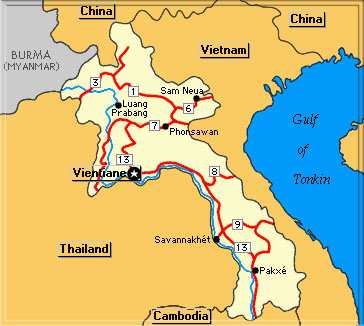
In Laos where the majority of citizens are poor, obtaining an overseas education qualification and experiences seem to be just a dream. Part of the corporate social responsibility (CSR) by a multinational corporation called MMG seems to be an interesting initiative. I have received this news from my colleagues from RMIT and need to share it with the reader of my blog. Why? Simply because the project show case a strong link of industry and an international education provider.

Base metals mining company MMG is pleased to announce the graduation of 37 Lao community members in Certificate III qualifications from the Royal Melbourne Institute of Technology (RMIT).

The community members are part of a program established by MMG and RMIT to provide skills to community members living around the Sepon copper and gold mine in the Savannakhet Province, Laos.

The program aims to increase the skill level of local community members and their capacity to undertake skilled jobs on site. It is part of MMG’s ongoing commitment to the sustainable development of the mine’s local community.

The graduates received the qualification in one of seven trades - carpentry, fabrication, refrigeration, mechanics, electrics, automotive or instrumentation – following four years of studies and at least one year of on-the-job training at the Sepon mine. The qualification is equivalent to that undertaken by apprentices in Australia.

The study component of the program included an annual 28-day intensive training course, run by RMIT trainers at the purpose-built Trades Training Workshop facility on site. The on-the-job training element involved working alongside, and being mentored by, maintenance supervisors and tradespersons. Successful graduates have all secured employment at the mine.

BounGneun Phonenavongdeuane, from Vilabouly District, gained her certificate in refrigeration and will work with the mine’s maintenance department. She said that graduating with a high qualification was very important for her.

“It will bring many changes for my future, especially related to my performance in the job I do,” she said.

Fellow graduate Viengkham Maphangvong, also from Vilabouly District, trained as a carpenter.

“I was very proud to be one of the local community members selected to join this high-standard study program. I would like to thank the company for providing an excellent training scheme for local people,” he said.

The achievements of the apprentices were recognised at a graduation ceremony that took place at the mine on 24 November. It was attended by family members of the graduates as well as local officials, company employees and representatives from RMIT.

The partnership between the Sepon mine and RMIT has been in place since 2006, with the first 16 apprentices and employees graduating last year.

Wednesday, 2 November 2011

Chinese University in Laos

I am currently in Vientiane, Laos, for my research project on poverty eradication and Multinational corporations. While I'm here one thing that comes across my interest is story about the establishment of a Chinese University in Laos.

Soochow University, in Jiangsu Province, is expected to open an affiliate in Laos in 2012, according to People’s Daily, the official newspaper of the Communist Party.

Clearly,Soochow will be the first foreign education institution to receive approval from the Laotian government to offer undergraduate and graduate programs. The university plans to provide courses for about 5,000 students in Laos, a country of more than six million where only 13 percent of the undergraduate-age population is enrolled in higher education, according to 2008 Unesco statistics.


A university official quoted in the report said Soochow would offer 12 majors, including Chinese language and literature, economy and trade, and engineering. Soochow University, which has about 50,000 students in China, expects the Laos campus to begin enrolling students next year, the report said.

While the university will initially send Chinese academics to the Laos campus, it plans to gradually employ more local teachers. The campus is estimated to cost $25 million.

China's collaboration with Laos in the form of education development is significant as Laos certainly push education in the forefront of national long-term development. As an educator, I really appreciate this collaboration and would love to witness the long and short-term imoacts of such collaboration.

Viva Global education! สะบายดี from Laos!

Thursday, 27 October 2011

International Education Market 'Strangled'?

PREMIER Ted Baillieu has accused the federal government of ''effectively strangling'' the international student market, and will join forces with New South Wales to push for wider changes to visa restrictions.
Only weeks after Canberra announced it would fast-track student visas and give foreign students the right to two years of post-study work - provided they graduate with a university degree - Victoria has branded the move a ''knee-jerk reaction'' that will threaten the state's $5.8 billion international education industry.
Mr Baillieu and his NSW counterpart, Barry O'Farrell, share concerns that the reforms focus too much on universities and not enough on the vocational education sector, where falling enrolments are the most severe.


he Liberal premiers are expected to use the next Council of Australian Governments meeting to challenge Prime Minister Julia Gillard to further ease visa restrictions, with Victoria arguing the changes should be based on the type of qualification students get, not just that it comes from a university.
''The Victorian government is concerned that the Commonwealth have effectively strangled the international education market with a knee-jerk reaction that is threatening a $5.8 billion industry in Victoria,'' Mr Baillieu's spokeswoman told The Sunday Age.
''Victoria is developing a number of initiatives to grow our international student market, particularly from key countries such as China and India. However, the Commonwealth's actions have been inadequate and are threatening this important economic sector.''
Under the Commonwealth's changes, adopted from the Knight review into student visas, foreign students who undertake a university bachelor degree will have access to a streamlined visa system and the right to two years' work after graduating, without a restriction on the type of job.
They also will no longer have to prove they have more than $75,000 in their bank account, bringing Australia's system into line with other countries such as the US, where students simply declare they have the means to support themselves.
However, vocational training colleges will have to wait on a second review, due next year, before they see major changes to processing arrangements for their own international students.
Figures from the Immigration Department show offshore grants (visa approvals) for the vocational education and training sector fell by 44.6 per cent between June 2009-10 and June 2010-11 - including a 64 per cent decline from China, and a 90.1 per cent fall from India. University offshore grants fell by 18.3 per cent over the same period.
While universities have welcomed the changes adopted from the Knight review, others in the sector share the state government's concerns. In a letter to the federal government, Holmes Institute director Stephen Nagle said it was grossly unfair the changes did not apply to government-recognised ''university-equivalent'' providers such as his.
He said that without a level playing field, ''Holmes will have suffered irreparable reputational damage and will have lost considerable recognition in the sector'' by the middle of next year.
''Holmes should be entitled to compete equally with Australian universities in the international education sector,'' he wrote.
The fall in foreign student numbers has been blamed on factors including tougher visa rules, a higher dollar, and violent attacks, mostly against Indian students, a few years ago.


Source: http://www.theage.com.au/victoria/student-market-strangled-20111008-1lf2d.html#ixzz1c2My08Or

Monday, 17 October 2011

International student 'blackmailed' by college


TWO directors of a controversy-plagued Victorian private college for international students allegedly blackmailed an Indian student who complained about the college's standards.
The revelations raise questions about the Baillieu government's vow to clean up the industry, with at least one of the men facing criminal charges, Kanwal Singh, still working at and managing the South Pacific Institute in Melbourne's CBD.

The Indian-born Kanwal Singh, his fellow South Pacific Institute director Gurvinder Singh, who is also an Indian national and a third man, Ayush Gupta, were recently charged by the Victoria Police with two counts of making an unwarranted demand on a person with menace.


The charges relate to allegations that the trio threatened a student to get him to retract complaints he had made in 2009 about the South Pacific Institute.

The student had made complaints about the standard of education at the college and allegations that school staff were taking cash from students to upgrade marks and employing unqualified teachers.

After calling the institute yesterday and asking to speak to the manager, The Age was put onto Kanwal Singh.

When asked about whether it was appropriate he remained at the college while facing criminal charges, he told The Age: ''I don't want to comment on anything, mate. I have to check with my lawyer.''

Victorian education authorities have known about allegations of misconduct involving the South Pacific Institute since at least 2009, when The Age first reported them. The institute has denied claims of impropriety.

After the 2009 reports, the then Brumby government ordered education regulators to audit the institute and more than a dozen other colleges that were considered high risk. After the audits, several colleges closed down, but the South Pacific College remained open.

The 2009 revelations also led to the introduction by federal and state authorities of tougher regulations that authorities hoped would help clean up the industry.
Labor MP Luke Donnellan, who has previously called for Victorian authorities to better support overseas students, said the Baillieu government should ensure college managers accused of criminal offences were suspended until their court matters were resolved.

''It seems strange that a government that was very quick in opposition to condemn Labor over its handling of issues affecting overseas students is allowing a manager of an international college to remain in his post while facing criminal charges,'' he said.

''This does enormous damage to our international reputation and Mr Baillieu must do more to ensure Victoria is a welcoming and safe environment for overseas students.''
The international student industry was a $17 billion industry nationally and brought $4 billion every year into Victoria, but has been hit in recent years by the rising dollar, poor regulation of providers, attacks on Indian students in Victoria and Commonwealth changes to visa and residency conditions.

Kanwal Singh, Gurvinder Singh and Ayush Gupta are listed to appear before the Melbourne Magistrates Court.


Read more: http://www.theage.com.au/national/education/international-student-blackmailed-by-college-20111017-1lteu.html#ixzz1b6a4vQoB

Sunday, 16 October 2011

Why do we care about Times Higher Education World University Rankings?


The Times Higher Education (THE) World University has recently announced the World’s top 400 Universities. American Ivy leagues and traditional British Universities are among the top 10, as one can predict. The World’s top University for 2011-12 is California Institute of Technology, followed by Harvard, Stanford, Oxford and Princeton Universities.

Universities from Asia have improved their performances from the previous rankings. Nine Universities from Asia, mainly from Japan, Korea and China, are listed in the World’s top 100 Universities. They include University of Tokyo (30), University of Hong Kong (34), National University of Singapore (40), Peking University (49), Kyoto University (52), Pohang University of Science and Technology (53), Hong Kong University of Science and Technology (62), Tsinghua University (71), and Korea advanced Institute of Science and Technology (94). Only one University from South East Asia, National University of Singapore (40), has been placed among top 100 Universities.


Compared to most OECD countries, Australia has been performing very well in the ranking system. According to the 2011-12 THE, the University of Melbourne (37), Australian National University (38), the University of Sydney (58), and the University of Queensland (74) have progressed to the World’s top 100 Universities. Some of our non-traditional Universities, such as Charles Darwin University, Flinders University or Swinburne University of Technology, have made it to top 400.

What are the implications of the THE University rankings to Australia? We can interpret the consequences of the THE rankings in our higher education system in various facets. We understand from THE, that they rank world Universities by investigating the learning environment (30%), volume, income and reputation (30%), research influence (30%), innovation (2.5%) and staff, student and research (7.5%). In reality, all Universities are created in different socio-political and academic contexts. One of the classic arguments is the size of economy and its relationship with higher education system. For instance, THE looks at public and industry research income. However, indicators of public and industry research income as proportions of total research income are not sufficiently appreciative of how the size of one's national economy influences results. In this regard, they tend to advantage Western economic models and their higher education systems, and concurrently disadvantage more nations and developmentally oriented models.


Australian Universities may perform well, due to a number of reasons. One is the push from the federal Government on research performance. In the last 24 months, Australian academics were bombarded by the idea of the excellence in Research for Australia initiative (ERA), which adopted a combination of indicators and expert review by committees. In February 2011, an analysis of the government's ERA report (conducted by The Australian newspaper) found that only 12 universities were performing research at or above international standard, with the top four performing at a rate that could be considered well above international standard. Academics are trained to aim for better research performance and it has become culture in (almost) all Australian Universities.

Ranking of Journal and publications, hence, were created to make sure that key research outputs were published in the top (A* or A) journals in each discipline. Resources were spent to make sure that your research findings are disseminated in the top rank outlets. For some academics, research has become their top priority because it can ensure the quality of their scholarships. Questions such as “how do you plan to publish in Nature?” or “Have you published in Journal of Marketing?” have become common issue for discussion among Australian academics. From 2008-2011, all academic conferences I have attended (mostly are in business and management discipline) includes, at least, one session on meeting with the editorial members of Journal of XYZ.

Some academics argue that, because of the strong demand for research and publication, other forms of academic contributions, such as teaching or community services, may have been taken for granted. The university has always been an intellectual community and a forum for discussion and debate. Within the university there are many reservoirs of knowledge to which society at large can have recourse; but it has also been a centre for individuals who have changed society’s perceptions. Not all of its goals are known in advance, and the ongoing ferment is one of its essential characteristic. Clearly, the ranking may not be able to capture some of these aspects.

When we explore the THE rankings, we may assume that traditional universities from the US and the UK tend to perform better than their rivals in Asia, Australia Africa or South America, especially when we explore ‘reputation’ of the institution. In previous years, it was reported that the THE rankings rely on reputational surveys, which involve polling academics about which universities they think are the best in a given field. Hence, it may be meaningless for most academics. Some argue that these assessments often use too few academics, who may not be well informed about all the universities they are being asked to judge the quality and reputation of the University, and that there is a bias towards English-speaking countries, particularly those from the traditional UK and American systems.

Some academics may argue against the methodology and validity of the ranking system. The clear dilemma of the university rankings system, despite its diversity, is that its core agenda is to develop systems or indicators drawn from one reality, and get them to speak to diverse academic contexts across culture. Australian academic contexts are clearly different from those in the Americas, Europe, Asia and Africa. Therefore, our strong performance may be valid or invalid in the global academic culture. The standard uniform of rankings system may promote the homogenization of academic culture, which is not desirable in education.

Of special concern are the aspects of the method which deal with the difficult-to-measure concept of institutional reputation and research influence. Some academics may choose to ignore the ranking. We, however, must admit that THE is one of the highly regarded publications. Its influence is worldwide. Most governments, academic institutions, research funding bodies and students look at them to judge the quality of the universities.

Because of its influence in the international education market, international governments, students and parents will continue to seek out the best institution and continue to consult the wide variety of available university rankings. Leaders in the Australian higher education system must understand the controversy and rules involved in university rankings. It will help Australian universities to improve their academic performance in the future.

Dr. Nattavud Pimpa is a senior lecturer in international business at RMIT University.

This essay was previously published in online opinion